Section outline
-
Learning is defined as a process that brings together personal and environmental experiences and influences for acquiring, enriching or modifying one’s knowledge, skills, values, attitudes, behaviour and world views. Learning theories develop hypotheses that describe how this process takes place. The scientific study of learning started in earnest at the dawn of the 20th century. The major concepts and theories of learning include behaviourist theories, cognitive psychology, constructivism, social constructivism, experiential learning, multiple intelligence, and situated learning theory and community of practice.
-
A youtube video leacture
At the end of this session you should be able:-
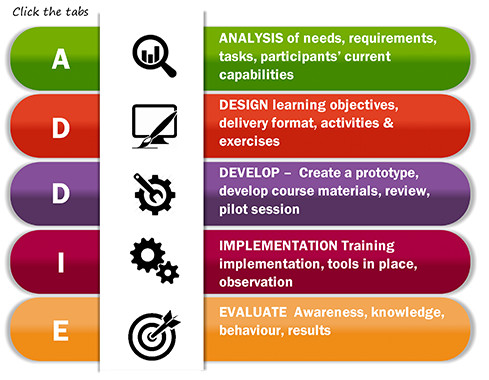
- To describe the instructional design process
- Use the process to design a learning program
- To create a residency digital learning program
How to Design & Teach an Online Course Using a Backwards Design Approach
-
Video lecture that defines the role of cognition and learning to help you determine the most appropriate instructional strategies for your online learners.
-
web site explaining Honey and Mumford's original definitions .Activist, Theorist; Pragmatist and Reflector
-
edited by Terry Anderson
Printed and bound in Canada by AGMV Marquis This publication is licensed under a Creative Commons License, see www.creativecommons.org. The text may be reproduced for non-commercial purposes, provided that credit is given to the original authors. Please contact AU Press, Athabasca University at aupress@athabascau.ca for permission beyond the usage
outlined in the Creative Commons license -
Overview of Current Learning Theories for Medical Educators
The American Journal of Medicine, Vol 119, No 10, October 2006
Dario M. Torre, MD, MPH,a Barbara J. Daley, PhD,b James L. Sebastian, MD,. Michael Elnicki, MD
-
Oxford Centre for Staff and Learning Development 2002
think about your own particular way of learning and to recognise that everyone does not learn the way you do
-
-
PowerPoint video lecture
At the end of this session you should be able:-
- To list and describe 4 theories of learning
- Adapt the theories for the digital age
- Describe how they will affect teaching
-
In in order to maximise one's own personal learning each learner ought to:
- understand their learning style
- seek out opportunities to learn using that style
Honey and Mumford have developed a Learning Style Questionnaire
Use this wiki to analyse your leanring style and comment on those of your peers
-
Denise Kay and Jonathan Kibble
Medical Education, College of Medicine, University of Central Florida, Orlando, Florida -
Implications for learning and teaching in medical education
David C. M. Taylor & Hossam Hamdy (2013) Adult learning theories:
Implications for learning and teaching in medical education: AMEE Guide No. 83, Medical Teacher,
35:11 -
-
Medical educators must answer questions about what they teach, how they teach, and how they assess learning in the Digital and Information Age. Related questions involve what personnel (i.e., talent) organizations should select and cultivate to drive their missions. Learner-centered paradigms, instructional design, and educational systems are growing areas of interest that must be deliberate, not reactionary.
Strategically Integrating Instructional Designers in Medical... : Academic Medicine. (n.d.). Retrieved January 23, 2019, from https://journals.lww.com/academicmedicine/Fulltext/2019/01000/Strategically_Integrating_Instructional_Designers.35.aspx -
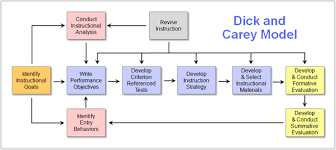
Walter Dick, Lou Carey, and James Carey developed this comprehensive and detailed process in 1978. It is composed of ten components as shown in the chart below:
-
Qiao et al. BMC Medical Education 2014, 14:79
The use of cognitive schemata, developed by experts as worked examples to facilitate medical students’ learning and to promote their clinical reasoning.
-
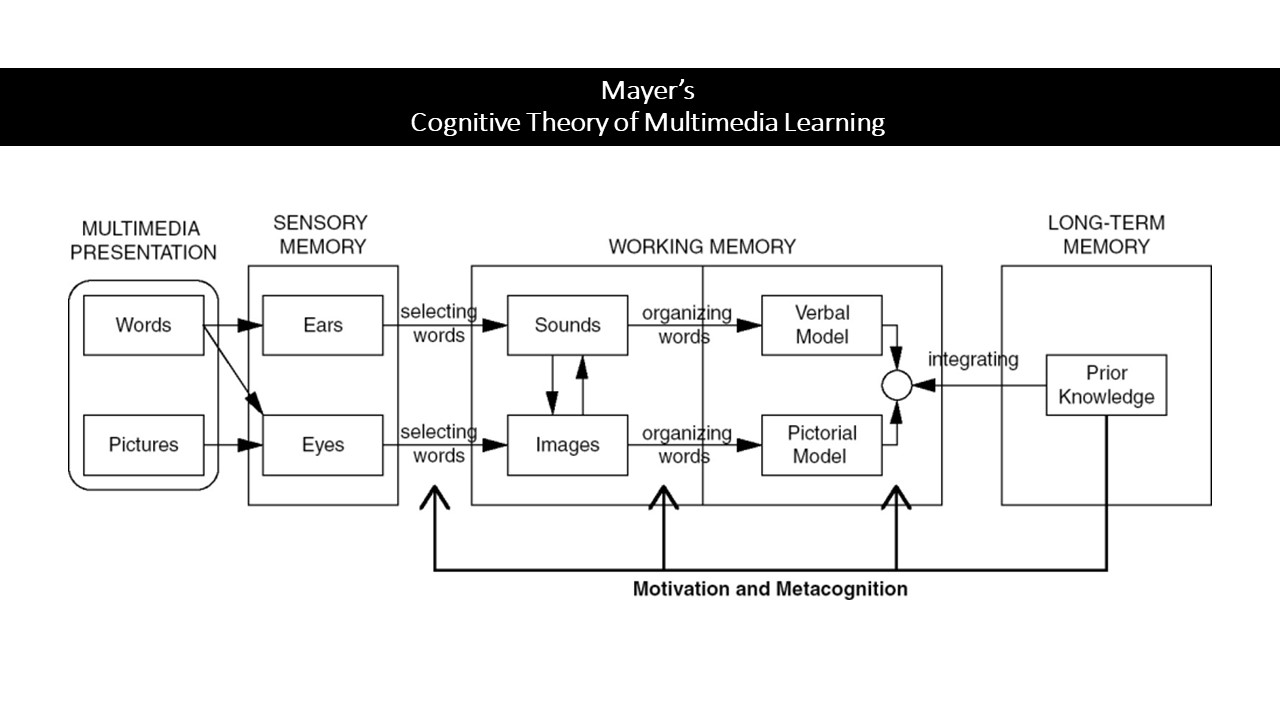
The science of instruction is the scientific study of how to help people learn. Three important instructional goals are: to reduce extraneous processing (cognitive processing that does not serve an instructional objective) during learning; to manage essential processing (cognitive processing aimed at representing the essential material in working memory) during learning, and to foster generative processing (cognitive processing aimed at making sense of the material) during learning. Nine evidence-based principles for accomplishing these goals are presented.
-
The working group developed five recommendations that academic health leaders and policymakers may use as a starting point for dealing with the instructional technology challenges facing medical education over the next decade. These recommendations are (1) using technology to provide/support experiences for learners that are not otherwise possible—not as a replacement for, but as a supplement to, face-to-face experiences, (2) focusing on fundamental principles of teaching and learning rather than learning specific technologies in isolation, (3) allocating a variety of resources to support the appropriate use of instructional technologies, (4) supporting faculty members as they adopt new technologies, and (5) providing funding and leadership to enhance electronic infrastructure to facilitate sharing of resources and instructional ideas.
Academic Medicine: April 2011 - Volume 86 - Issue 4 - p 435-439
-
Interactivity, practice exercises, repetition, and feedback seem to be associated with improved learning outcomes, although inconsistency across studies tempers conclusions. Evidence for other instructional variations remains inconclusive.
Academic Medicine: May 2010 - Volume 85 - Issue 5 - p 909-922
-