-
AIDE Learning Hub
HEALTHCARE · EDUCATION · RESEARCH
Build the capability to use AI responsibly in your professional work.
Practical learning for healthcare professionals, educators, researchers and leaders. Learn to evaluate AI outputs, improve everyday workflows and apply your learning through professional tasks.
Start with AI foundations Explore learning pathways
New to AI? Begin with Gen AI 101.
What do you want to achieve with AI?
Choose an entry point into our existing learning resources. Check each course for activities and enrolment requirements.
Healthcare professionals
Explore suitable tasks, verify outputs and design supervised workflows.
Explore agentic AI for cliniciansEducators
Develop and review learning activities, educational resources and assessments.
Explore AI in learning designResearchers
Support research tasks with source verification, rigour and transparency.
Explore AI for researchAdministration and productivity
Map recurring tasks and explore context engineering and workflow improvement.
Explore workflow designLeadership and management
Build the foundations for guiding professional change. This is a management foundation, not a dedicated AI leadership course.
Explore clinical leadershipA practical approach to learning
Practise. Verify. Improve. Apply.
Bring a professional question to your learning. Examine AI responses critically, check claims against reliable sources and document your revisions. Connect course activities to your own work.
Three ways to begin
Understand the foundations: Gen AI 101
Explore AI concepts, prompting, limitations and responsible use.
Apply AI to teaching: AI in Learning Design
Explore the development and review of educational materials.
Design a supervised workflow: Agentic AI for Clinicians
A four-hour, self-paced pilot for practising clinicians. Design and test a bounded workflow using entirely fictional cases.
Professional judgement remains central
Verify AI outputs, acknowledge AI assistance and follow organisational policies. Use synthetic information for practice. Do not enter identifiable patient or staff data into public AI tools. Course participation does not itself establish clinical competence or accredited CPD status.
Learning grounded in professional practice
Led by Dr Vaikunthan Rajaratnam, hand surgeon, medical educator and instructional designer, connecting healthcare practice, education and responsible AI use.
Management in Medicine remains part of this learning platform.
-

This online module equips educators, instructional designers, and healthcare trainers with the skills to integrate AI into learning design for more effective, personalised education. Participants will explore how AI can streamline curriculum development, generate structured learning blueprints, and support Universal Design for Learning (UDL) principles. Through interactive lessons, case studies, and hands-on activities, learners will discover how to create engaging multimedia content, develop AI-assisted assessments, and optimise course delivery for diverse learners. The module also covers ethical considerations, accessibility, and the role of AI in fostering active learning and critical thinking in medical and healthcare education.
-

This course empowers professionals to harness the potential of AI by mastering context engineering and process re-engineering. Participants will learn to personalise AI interactions using their professional profiles for more relevant and efficient outcomes. They will develop skills to map and analyse workflows, identify inefficiencies, and apply AI-driven solutions to streamline tasks. By the end of the course, attendees will have a personalised roadmap for integrating AI tools into their daily routines, enhancing productivity and job satisfaction. Designed for professionals seeking to optimise workflows and reduce repetitive tasks, this course offers practical strategies to transform how they work with AI.
-
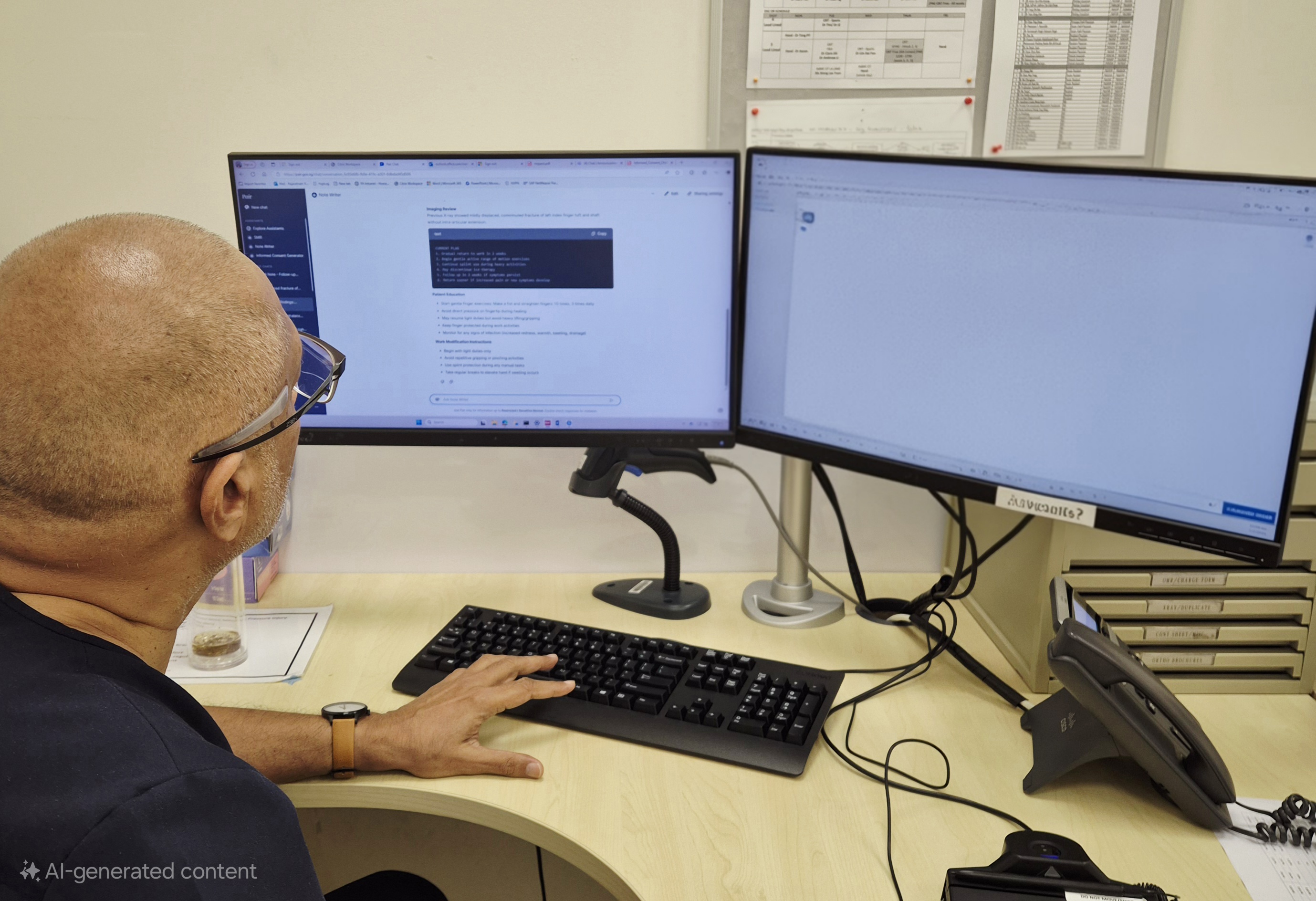
This e-learning course empowers higher education learners to harness the potential of generative AI tools like ChatGPT, Google Gemini, Microsoft Copilot, DeepSeek, and NotebookLM for academic success. Through interactive activities and real-world applications, students will learn to conduct literature searches, generate draft texts, organise research materials, and collaborate effectively using AI. The course emphasises ethical considerations, including academic integrity, bias awareness, and data privacy, ensuring responsible AI usage. By the end, participants will be equipped to integrate AI tools into their academic workflows while upholding the highest standards of ethics and critical thinking.
-
Have you ever wondered how generative AI is transforming the way we learn, teach, and innovate in academia? In this course, you'll gain a clear understanding of what generative AI is, how it differs from traditional AI, and how large language models work behind the scenes. You'll learn practical strategies for crafting effective prompts and contexts, explore the ethical and bias-related challenges of AI, and discover responsible applications across healthcare, education, and engineering. Through interactive lessons, real-world examples, and reflective activities, you'll be equipped to use generative AI thoughtfully and effectively in your academic and professional pursuits.
-
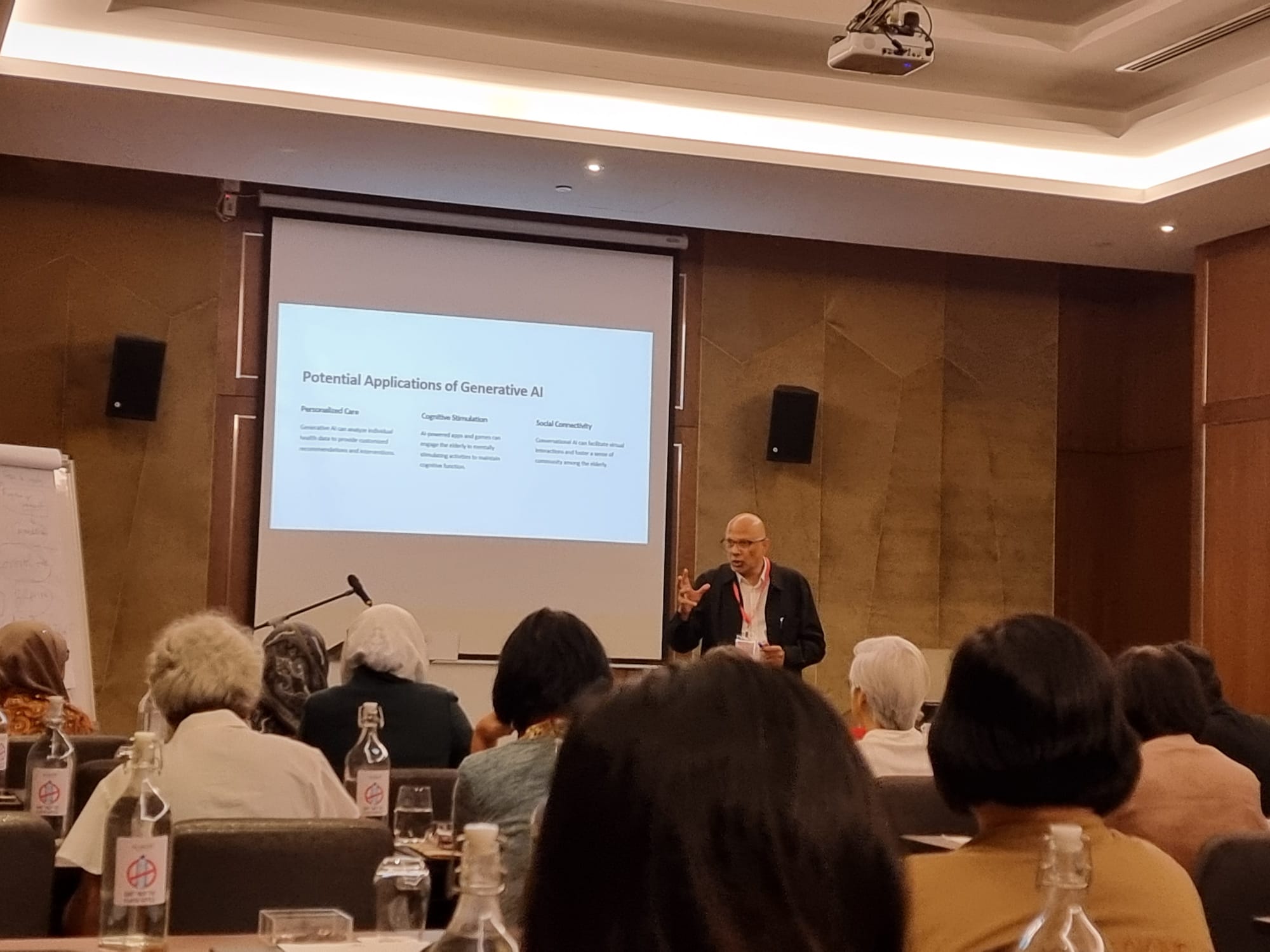 Artificial intelligence is rapidly transforming healthcare, and nursing is at the forefront of this change. As generative AI tools become more common in clinical settings, understanding how they work—and their limitations—is essential for safe, effective, and ethical patient care. Building foundational AI literacy empowers you to make informed decisions, protect your patients, and confidently navigate the evolving landscape of modern nursing practice.
-
This module helps you turn a recurring professional task into a bounded, inspectable AI supported workflow. You will practise with synthetic information, check AI outputs against supplied sources, test failure conditions and submit a workflow that another professional can review. The goal is a supervised educational prototype. Completion does not establish clinical competence to deploy an AI system or confer accredited CPD hours.
-